
Thought
Refreshing GovPress
An update to the open source WordPress theme for government.
August 8, 2026
The GovFresh feed.
Thought
An update to the open source WordPress theme for government.
August 8, 2026
Thought
Public service with and for the people.
June 1, 2026
Thought
Build your bot policy now and work with your digital team or vendor to implement it.
February 24, 2026
Paper
How a short-term, experimental project scaled digital service innovation and impact across the State of California.
July 30, 2025
Signal
A global movement of community-focused events that foster civic collaboration and innovation
July 21, 2025

Thought
AI will expedite government services moving from aesthetic design to machine-readable data.
June 16, 2025
Podcast
Government's history, relationship and evolution with hackers and hacking.
May 28, 2025
Demo
Project ScanGov co-maintainer Luke Fretwell gives a demo of the latest updates.
April 27, 2025


Research
GovFresh research notes on the AI Cybersecurity Collaboration Playbook.
February 19, 2025

Research
GovFresh research notes on the Declaration for the Future of the Internet.
February 11, 2025
Thought
Repository bureaucracy and how the general public can help preserve government technology assets.
February 6, 2025
Signal
Analysis of policy implications from DEF CON 32 findings.
February 4, 2025


Research
GovFresh research notes on the Open Source Institute's Open Source AI Definition.
January 21, 2025
Direct Message
Acquisition strategist, author, innovator, problem solver
January 13, 2025

Research
GovFresh research notes on the Strengthening Agency Management and Oversight of Software Assets Act.
January 12, 2025
Demo
Data.gov Product Manager Tim Lowden demos the new metrics dashboard.
January 10, 2025
Direct Message
Author, catalyst, & champion for public engagement with space, science, & technology
January 8, 2025


Research
GovFresh research notes on the U.S. Web Design System.
December 17, 2024
Thought
A simple way to keep public service communications open, authentic and regular.
December 9, 2024
Brief
A brief-ish explainer of Andreessen Horowitz's American Dynamism.
December 3, 2024


Research
GovFresh research notes on artificial intelligence and the U.S. government.
November 26, 2024
Brief
A brief-ish explainer of the new web accessibility law for state and local governments.
November 13, 2024





Thought
We need better guidance for a more secure digital government experience.
November 12, 2024
Signal
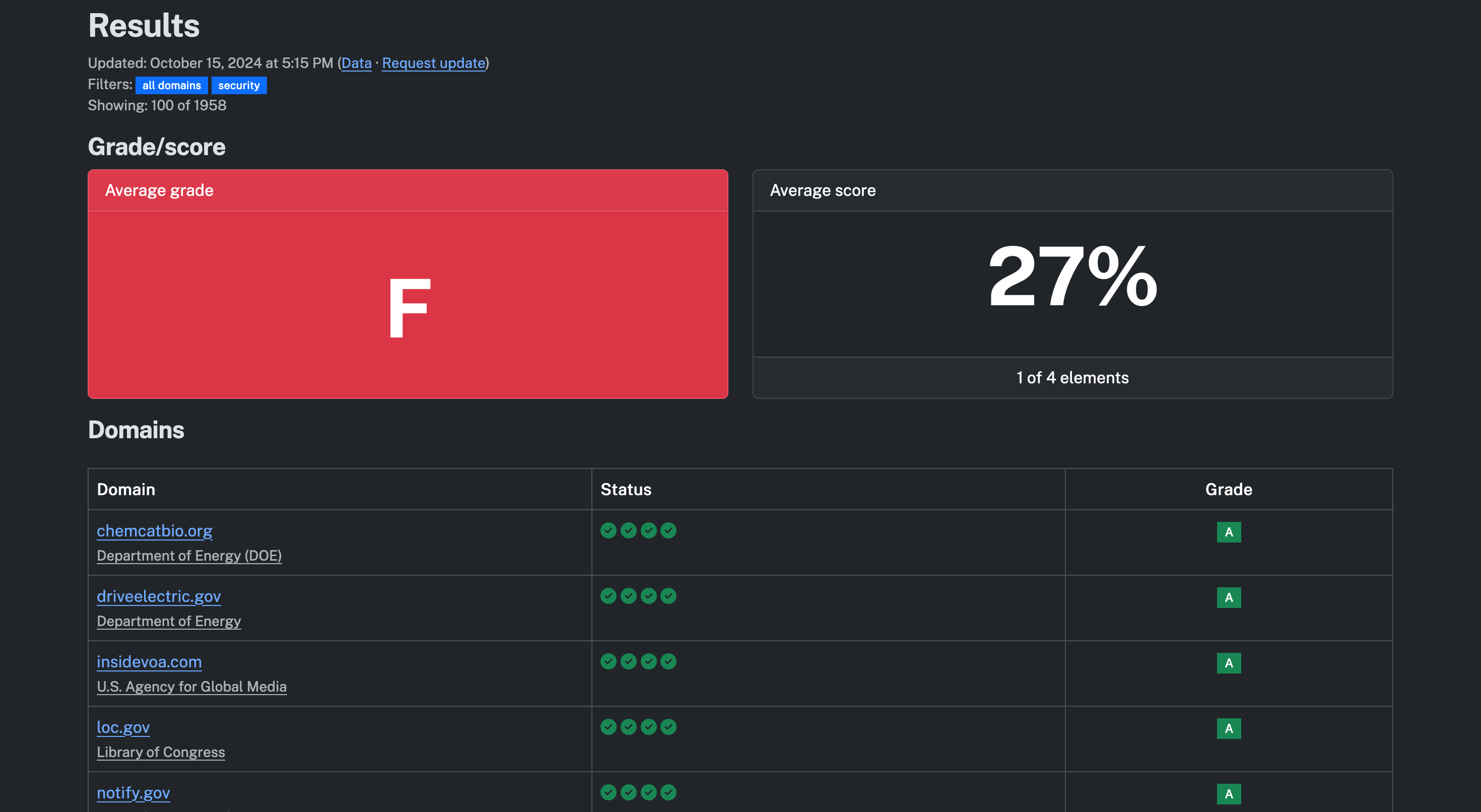
ScanGov adds security grades, scorecards.
October 22, 2024




Research
GovFresh research notes on the National Institute of Standards and Technology Cybersecurity Framework.
October 7, 2024
Thought
I created podcast-like overviews of FedRAMP, NIST Cybersecurity Framework, TechFAR and Zero Trust with Google NotebookLM's deep dive feature.
October 7, 2024

Research
GovFresh research notes on the 21st Century Integrated Digital Experience Act.
October 6, 2024
Signal
Getting first projects launched.
October 1, 2024
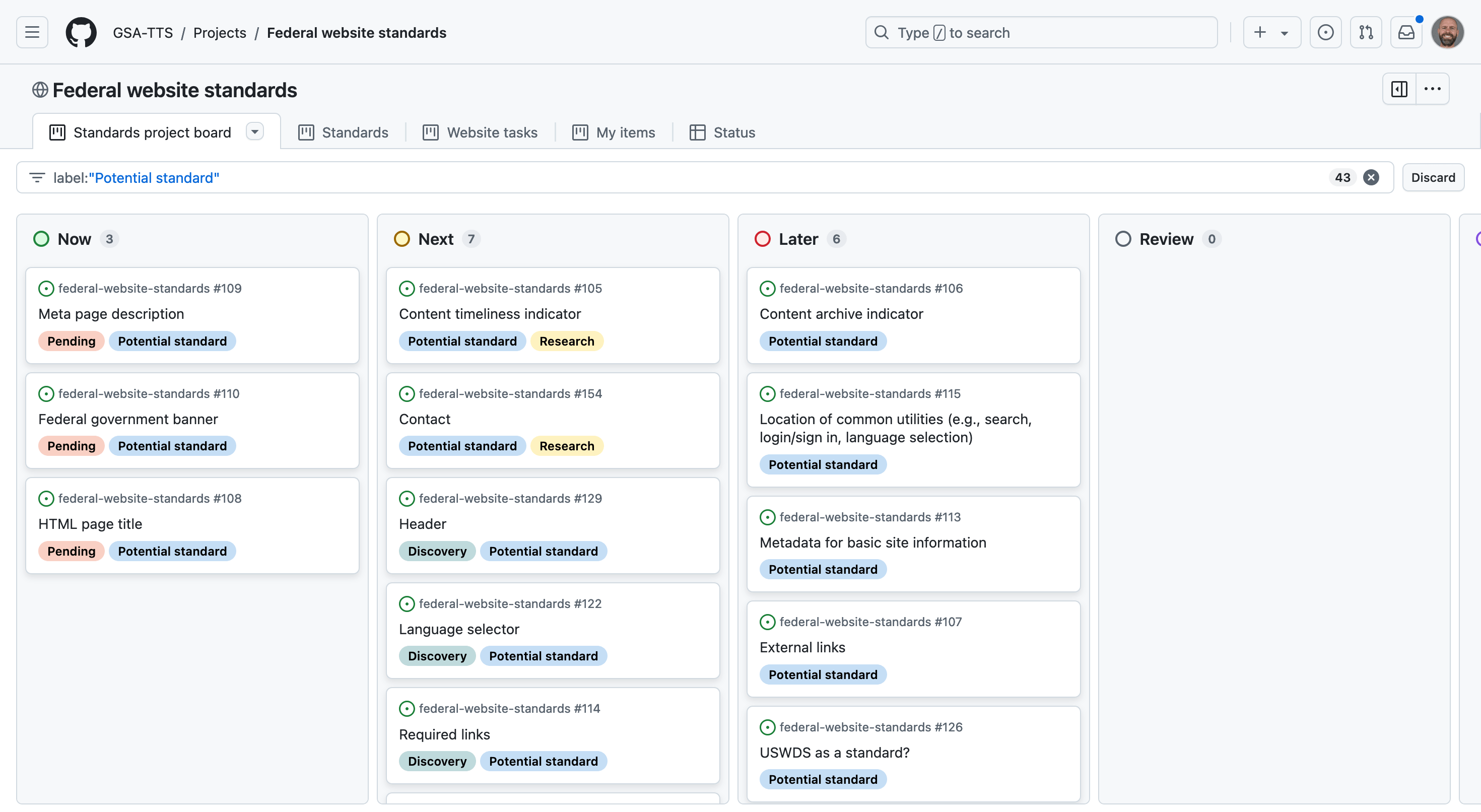
Signal
Will help “deliver consistent, digital-first experiences for the public."
September 27, 2024
Thought
Great source code meets machine-readable web industry standards and best practices and – perhaps most important to some – adheres to the code of law.
June 12, 2024


Thought
How government-managed domains conform to basic metadata practices.
February 15, 2024
Thought
Complete metadata can have a significant impact on how citizens experience government digital services.
January 10, 2024

Thought
Beyond policy, proactive engagement and better data management will make government a good steward and partner in responsible artificial intelligence efforts.
November 15, 2023
Thought
Properly managing and delivering citizen data should be the U.S. government's first CX priority.
October 30, 2023
Podcast
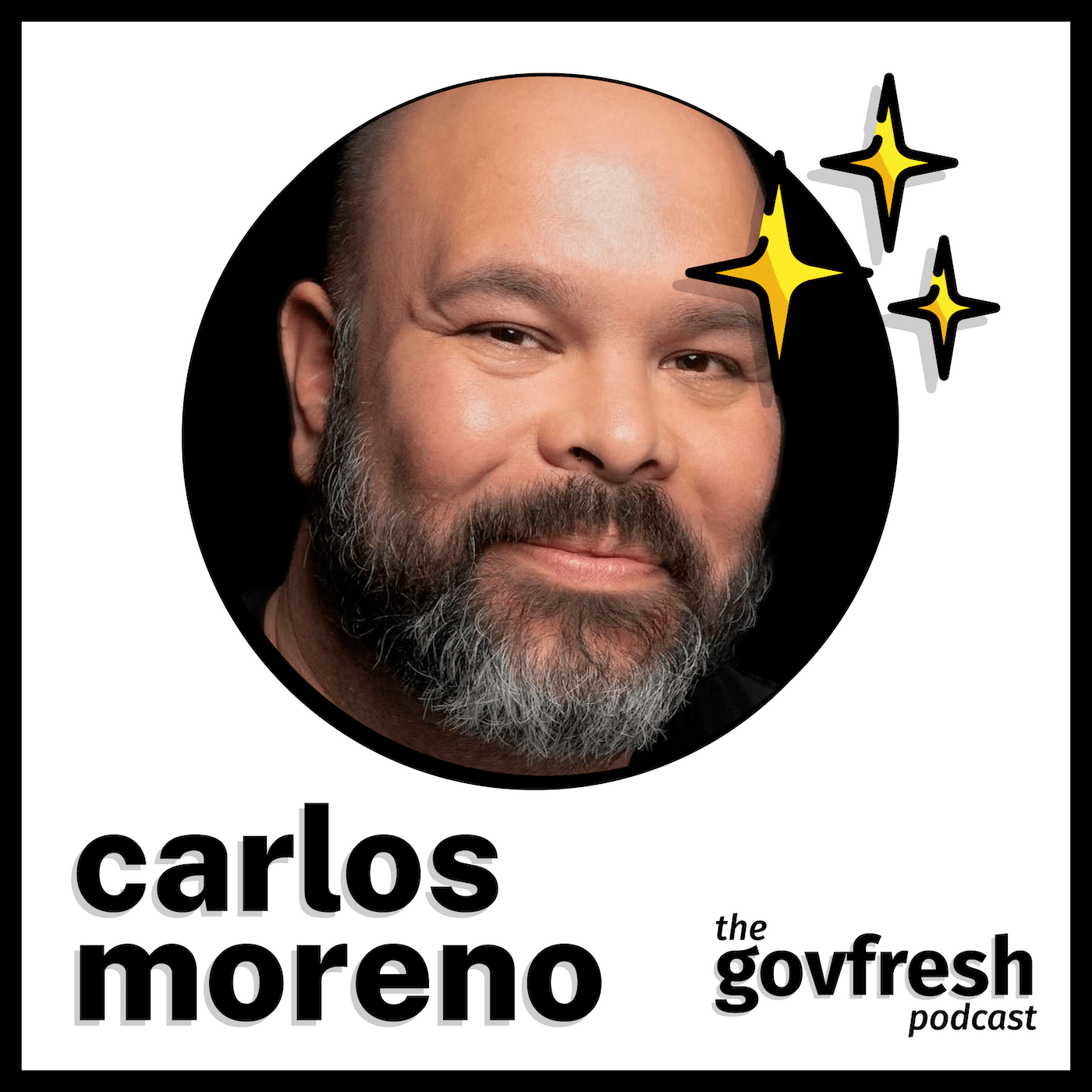
A citizen journalist and civic technologist shares his experiences and lessons learned civic hacking.
October 9, 2023
Podcast
A pioneering civic technologist retrospects and shares his thoughts on hacking government for good.
August 28, 2023

Signal
A 'civic opportunity to help shape the government’s thinking about open-source software security.'
August 18, 2023

Thought
How government agencies, academia, nonprofit organizations and public sector vendors can build open, participatory models of operating.
August 2, 2023
Thought
A simple practice can help give clarity to public sector projects and services, and how those impacted can engage with them.
July 27, 2023
Thought
True democracy – and great technology – is organic, collaborative, participatory, responsive, iterative, adaptive.
July 12, 2023


Thought
By adopting a simple public engagement framework, we can build a more inspired government, together.
March 4, 2023

Direct Message
Director of Challenge.Gov + CitizenScience.Gov
February 1, 2023

Signal
Re-imagining federal government job openings with the USAJOBS API.
December 31, 2022
Signal
Building a map of weekly notifiable disease cases across the United States.
December 31, 2022
Signal
Building a cybersecurity news page using the Cybersecurity & Infrastructure Security Agency RSS feeds.
December 30, 2022
Signal
Building a look-up of Food and Drug Administration approved medicines.
December 30, 2022
Signal
Building a national parks directory with the NPS API.
December 30, 2022
Signal
Building a survey mark finder app.
December 30, 2022
Signal
Building community, civic hacking with my son, pedigree and public interest technology.
December 15, 2022
Signal
Building a space photo of the day page using NASA's astronomy picture of the day API.
November 3, 2022
Signal
Building an executive branch agency list using the National Archives' Federal Register API.
October 31, 2022
Signal
Building a simple .gov domain search tool with CISA open data.
October 29, 2022
Signal
Building congressional pages with the new Library of Congress Congress.gov API.
October 26, 2022

Thought
Every government website must have an RSS feed. This guarantees an open, universal standard for syndicating government information.
October 18, 2022
Direct Message
CEO, founder, justice reform advocate, community leader, change agent
August 18, 2022

Thought
The community that supports digital government services should be undeniably representative of everyone.
August 16, 2022

Direct Message
Civic innovator, systems changer, homelessness ender
August 3, 2022

Signal
AGL, which has since evolved into Technologists for the Public Good, was the testing ground for an experiment in what I now call an open civic community of practice.
July 28, 2022
Direct Message
Civic tech evangelizer. Storyteller. Diversity seeker.
July 27, 2022

Direct Message
Resiliency planner, startup founder, SimCity aficionado
July 15, 2022
Signal
One simple piece of code to the U.S. government's employment website could go a long way in increasing social media reach.
July 1, 2022
Direct Message
Civic techie, bureaucracy hacker, dot connecter
June 21, 2022
Signal
Time for Alpha 2.0.
March 21, 2022
Signal
Kickstarting USA.GovFresh, beginning with Federal Register open data.
March 10, 2022
Signal
Once thriving, now barely surviving. Ideas on how we can breathe more life into it.
March 4, 2022

Signal
A publishing platform that says it's an environment open to everyone doesn't provide equal access to all.
February 17, 2022
Signal
Re-imagining the government domain name registry experience.
January 21, 2022
Signal
Making it more accessible, and suggestions for the CDO Council.
January 14, 2022
Signal
Adventures in father-son civic hacking.
January 11, 2022

Podcast
The Government We Need talks with Mindful Badge's Richard Goerling about mindful policing.
December 20, 2021

Signal
Olay’s Open to Change advertising campaign is something government should take note of.
November 15, 2021
Signal
In The Premonition, as he tends to do, Michael Lewis turns everyday people willing to tell us what we need to hear at a critical societal moment into a cast of characters we can't help but cheer on, but also leave wishing the world had more brave voices such as these.
July 6, 2021
Signal
The National Institute of Standards and Technology officially released Open Security Controls Assessment Language 1.0.0, a federal government effort to standardize authorization packages and streamline security reviews using a common machine-readable language.
June 8, 2021
Signal
The U.S. federal government's user experience community of practice is hosting a three-day virtual UX summit June 22-24.
June 7, 2021
Signal
Cyd Harrell's "A Civic Technologist's Practice Guide" is the book we've always needed, but wouldn't have been possible until now thanks in no small part to the unparalleled experience she's accrued over the years working at Code for America, 18F, California Administrative Office of the Courts, and other service design-focused environments inside and outside of public service.
May 15, 2021
Signal
The U.S. Space Force has outlined its vision for a digital service.
May 6, 2021
Signal
In-Q-Tel, the innovation and venture arm of the U.S. intelligence community, has published several open source themed posts recently, including "Toward Secure Code Reuse" and, most recently, one about GitGeo, a tool it developed that analyzes the geography of developers associated with a GitHub repository.
April 28, 2021
Signal
The DotGov Program, which administers .gov top-level domain assignments to official U.S. government entities, now offers the service for free.
April 27, 2021
Signal
GitHub has a great write-up of how open source community contributions played a key role in helping NASA’s Ingenuity helicopter achieve lift-off on Mars.
April 19, 2021
Signal
President Biden has nominated digital government innovator Robin Carnahan as the next administrator of General Services Administration.
April 6, 2021
Signal
Apparently, in 2021, there are people who still refuse to recognize the holistic, energetic and sustainable impact 18F and the U.S. Digital Services has -- and continues to have -- on keeping the federal government digital services industry and profession relevant and attractive to highly-qualified designers, developers, product and project managers and anyone generally interested in well-functioning U.S. Government technology.
February 22, 2021
Signal
What's great about about the public roadmap, particularly for large government institutions, is that they show there is a plan, but they are also a powerful demonstration of civic openness.
February 1, 2021

Podcast
The Government We Need talks with Amanda Renteria about getting public benefits to people in the digital age.
January 31, 2021
Signal
Virtual queuing and appointment startup Whyline has completed a $1.25 million pre-series A round led by e.Republic Ventures.
January 28, 2021
Signal
The Center for Plain Language published its 2020 federal website plain language report card.
January 13, 2021
Signal
The U.S. General Services Administration's 18F has a great post on why distributed government is critical to highly-functioning public service teams, emphasizing a 'distributed first' approach to work.
January 12, 2021
Signal
Facebook announced that Roy L. Austin, Jr., will join the company as vice president of civil rights and deputy general counsel to establish the company’s new internal civil rights organization.
January 11, 2021
Signal
In the aftermath of the deplatforming of Donald Trump, Mozilla offers concrete advice on how to best deal with bad actors -- including heads of states and politicians -- on social media platforms, beyond just suspending or permanently removing them.
January 10, 2021
Signal
To better demarcate the lines between freedom of speech and censorship, the Electronic Frontier Foundation calls for social media platforms such as Twitter, Facebook, Instagram to apply a human rights framework to their terms of use.
January 8, 2021
Signal
Twitter announced it has permanently suspended Donald Trump's Twitter account.
January 8, 2021
Signal
Canadian Digital Service design research team members Martha Edwards and Anne-Marie Mulumba share great insights into how people in government are making their research more inclusive.
January 7, 2021
Signal
Government Technology released its annual GovTech 100 list for 2021 and, while there are newcomers to the list, there is still a lot of room for new innovation.
January 6, 2021
Signal
The Beeck Center for Social Impact + Innovation at Georgetown University today announced that Cori Zarek will take over as executive director.
January 5, 2021
Signal
I've been an advocate of U.S.-based government organizations having .gov domains for quite sometime, so it's great to see Congress has made this easier and potentially cheaper to achieve.
January 5, 2021
Signal
The Department of the Air Force has directed commanders to conduct a comprehensive review of official and unofficial unit emblems, morale patches, mottos, nicknames, coins and other forms of unit recognition and identity to ensure an inclusive and professional environment within 60 days from Dec. 23, 2020.
January 5, 2021
Signal
The U.S. Government Accountability Office published a report on data governance progress across four federal agencies.
January 4, 2021
Signal
The U.S. Department of Veterans Affairs published what it says is the government's first-ever employee experience journey map.
January 4, 2021
Signal
Shari Davis talks with The Government We Need about building a more inclusive, democratic public budgeting process.
August 5, 2020
Podcast
Shari Davis talks with The Government We Need about building a more inclusive, democratic public budgeting process.
August 5, 2020
Signal
The Government We Need talks with Rick Cole about local government's role in sustainability.
July 27, 2020

Podcast
The Government We Need talks with Rick Cole about local government's role in sustainability.
July 27, 2020

Podcast
The Government We Need talks with Brian Elms about how government can ask the right questions and find its true public service purpose.
October 7, 2019

Podcast
The Government We Need talks with Code for America founder Jen Pahlka about how technology can be a force for civic change.
August 14, 2019

Podcast
The Government We Need talks with Run for Something’s Sarah Horvitz about the changing face of local politics and how to elect diverse representation.
July 25, 2019
Podcast
The Government We Need talks with Bruce Schneier about internet+ security and government’s role in keeping us safe.
June 19, 2019
Showing 15 of 142